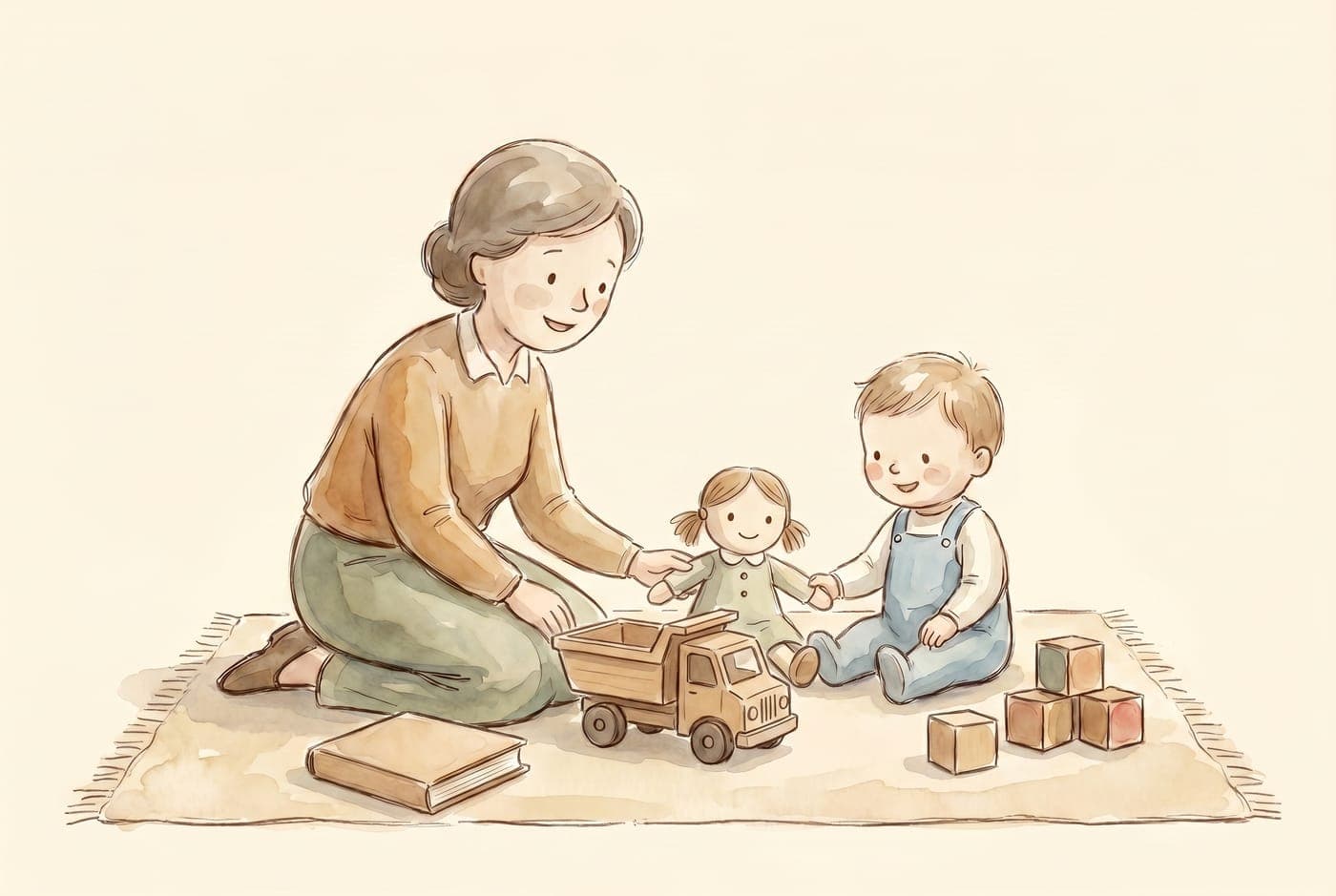
The toys are the excuse. The conversation around them is the workout. Every back-and-forth between you and your child is a small rep for the part of the brain that runs language. Here's how to do more of it without it feeling like homework.
Serve. Return. Serve. That's the whole game.
A "serve" can be a babble, a glance, or a point
Long before kids talk, they serve. A baby looks at a dog and you say "yes, that's a dog." A toddler hands you a block and you say "heavy." A 3-year-old asks "why are the leaves on the ground?" and you actually answer. Each one of those exchanges is a small loop closing.
It's the loop, not the vocabulary, that does the work. A thousand quick returns over a week beats one long lecture every time.
Toys shape how much talk shows up
Sit next to a child playing with a battery-powered toy and listen. You'll say almost nothing. The toy is already saying everything. Switch to a wooden puzzle, a doll, or a book and the soundtrack changes. Suddenly there are colors, counts, names, stories, jokes.