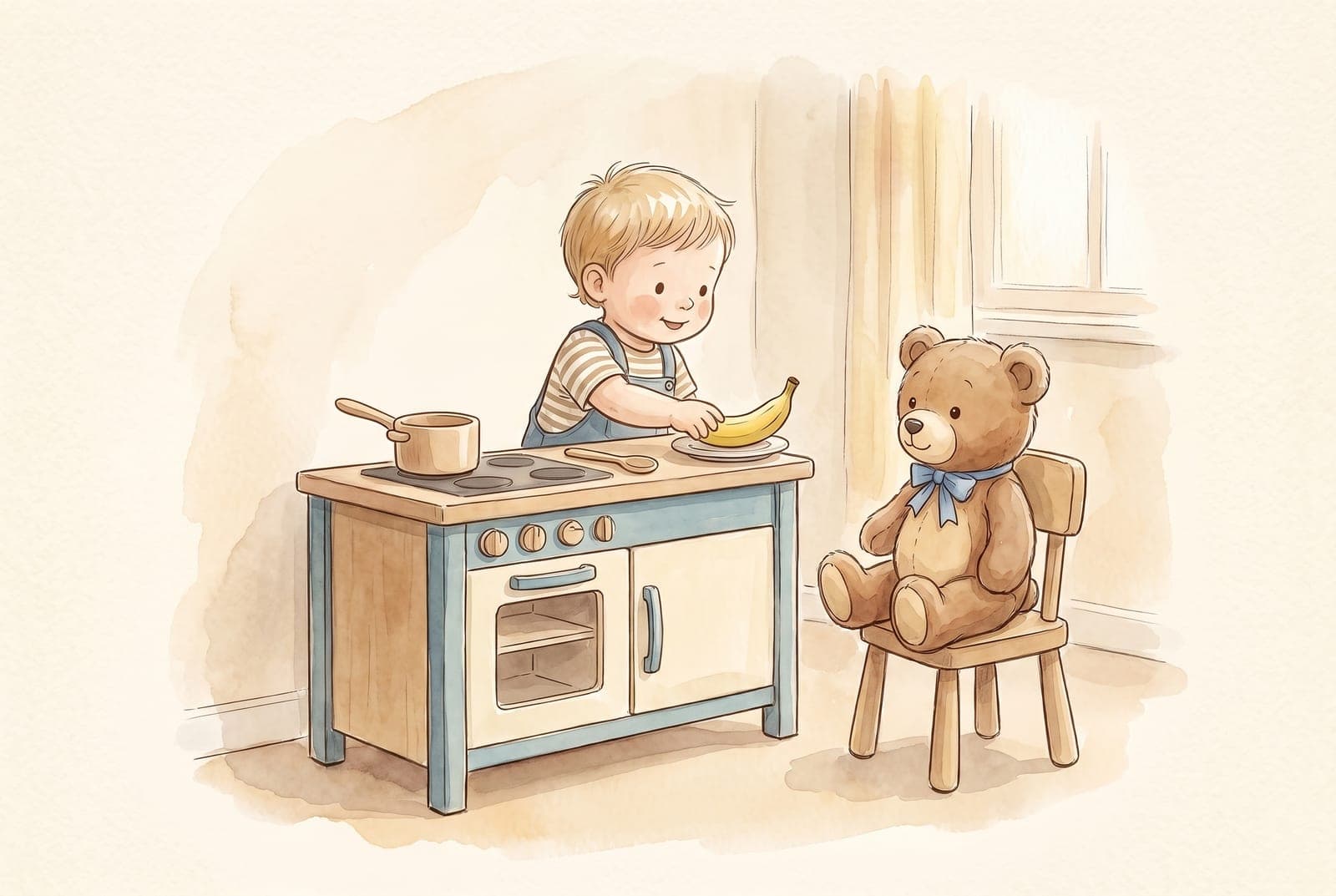
Two is when toys start to connect. A 2-year-old puts the toy banana on the toy plate, feeds it to the bear, and then tries to open the real fridge to get more. This guide covers the toy types that fit what 2-year-olds are learning, what to leave off the list, and how to check the shelf before birthday and holiday gifts pile up.
What 2-year-olds are working on
The CDC's milestones are things at least 75% of children can do by a given age. By 2 years, most:
- play with more than one toy at the same time, like putting toy food on a toy plate
- try to use switches, knobs, or buttons on a toy
- hold a container in one hand and take the lid off with the other
- kick a ball and run
By 30 months, most play next to other children and sometimes join in. Look for toys your child can combine, such as toy food and plates.
Toy types that get played with
A toy kitchen, or just the food and dishes
"Putting toy food on a toy plate" is the CDC's own example of a 2-year milestone, so start with toy food, plates, cups, a pot and a spoon. A full play kitchen is nice if you have the space; the food and dishes are what get used. Add a doll or a few stuffed animals to feed and the set covers a lot of play.
Vehicles with somewhere to go
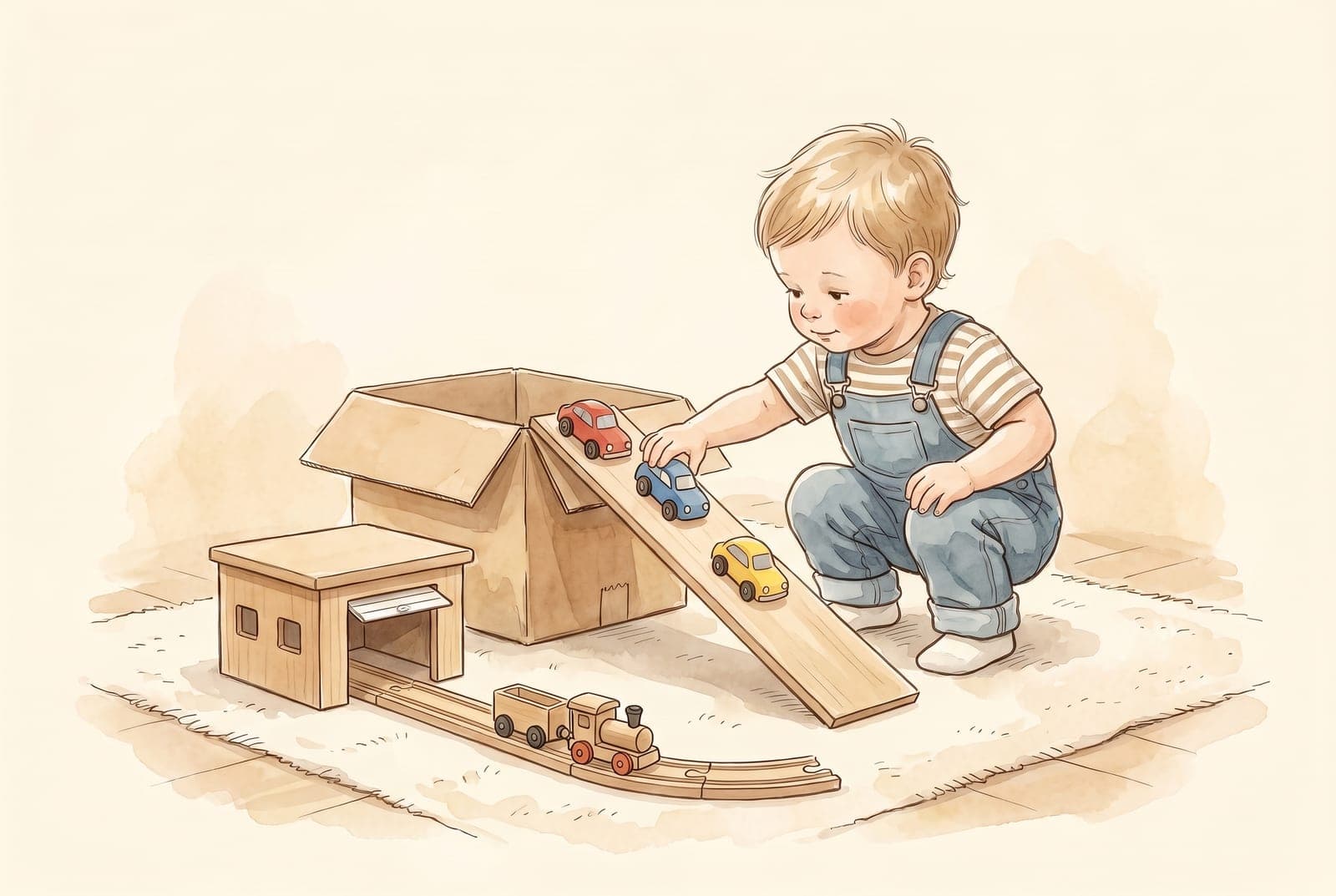
Cars, a dump truck, a train with a short track, a ramp or garage. Vehicles are a popular gift, so many 2-year-olds already have a bin of them. If yours does, add the "somewhere": a ramp, a car wash made from a box, a simple track. That turns a pile of cars into a game.
Toys with buttons, knobs, and lids
Lift-out puzzles with knobs, a busy board, containers with screw-on lids, a toy with switches that make something pop up. Trying switches and knobs is a CDC 2-year milestone, and the CDC suggests toys where your child pushes a button and something happens. Prefer toys where the child's action causes the result over toys that play on their own.
Balls and things to ride
Kicking and running are on the 2-year list, and the CDC recommends giving balls to kick, roll, and throw. Add a ride-on they push with their feet, or a small slide if you have the room. The AAP counts balls, push toys, and ride-ons as gross motor toys and notes they can help with self-regulation and play with other kids.
Blocks and first puzzles
The AAP's toy report connects blocks and puzzles to fine motor, language, and early math skills. Wooden blocks, large interlocking bricks, and chunky 3- to 6-piece puzzles fit this age, and a good set of blocks keeps getting used for years.
Art supplies
Chunky crayons, washable markers, stickers, playdough with a rolling pin and a few cutters. The AAP lists coloring supplies, clay, and stickers as toys that build creativity and fine motor skills. They're also consumables, which makes them an easy answer when family asks what to buy.
Books
Board books are still the best choice for a child who tears pages. Picture books with simple stories start to work now too.
What to leave off the list
More toys that play on their own
A toy that lights up, sings, and moves by itself is fun to watch, but it leaves less for your child to do. The AAP's toy report found no evidence that digital or interactive toys match the benefits of hands-on and pretend play. If the shelf already has one, a toy your child works by hand will add more.
More vehicles, if the bin is full
Cars and trucks are easy to give and easy to duplicate. Count the bin first.
A note on safety
Always check a toy's age label and safety warnings before you buy it, and follow the manufacturer's instructions. For current toy safety guidance and recalls, see the U.S. Consumer Product Safety Commission and the American Academy of Pediatrics. If you're unsure whether a toy suits your child, ask your pediatrician.
Before you buy, check what's already there
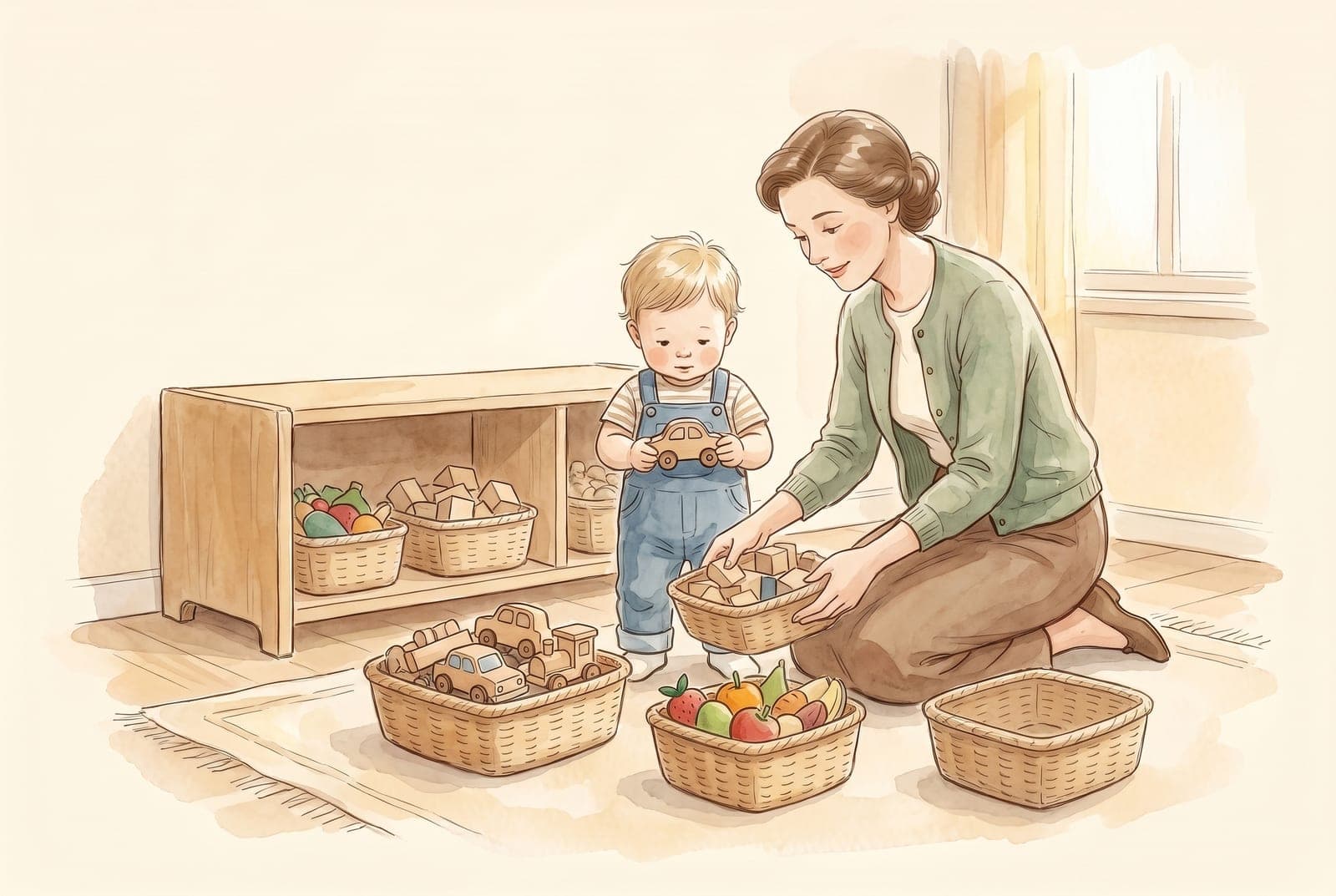
Sort the shelf into the groups above: pretend play, vehicles, buttons and lids, balls and ride-ons, building, art, books. Shelves are often heavy in one or two groups and empty in another. The empty group is your gift list, and it's the list to give grandparents before they shop.
Buying for a grandchild, niece, or nephew? Ask the parents to scan their toys with Toy Rotation App and share the link with you. You'll see what's already at home and which kinds of play are missing, and you can check it again before every birthday and holiday.
Gifts that aren't toys
A toddler class (music, swimming, tumbling), a children's museum or zoo membership, a library book bag with a first library card, a toddler-height step stool for helping in the kitchen, or a day out with a grandparent.