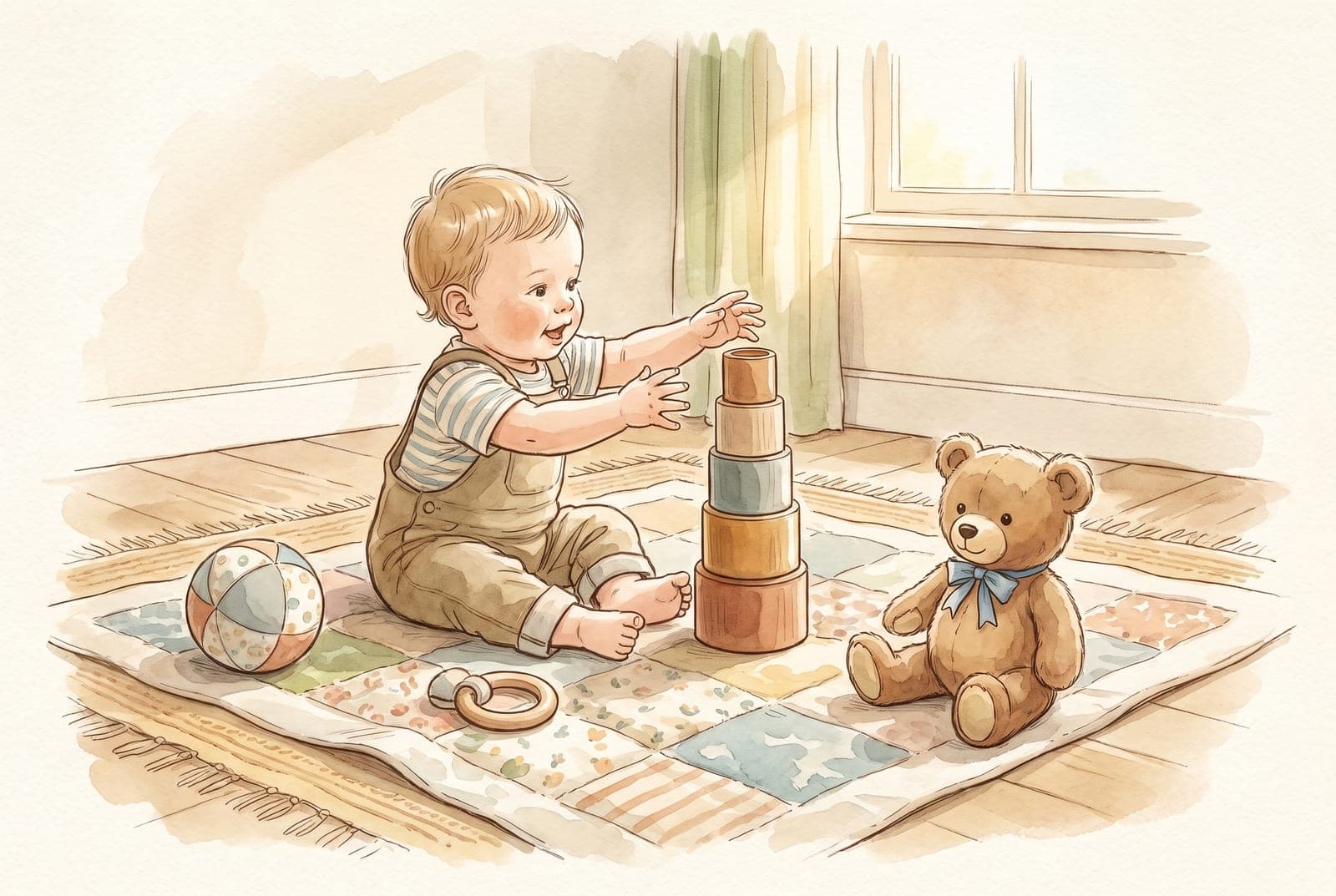
Between 6 and 12 months, a baby goes from grabbing whatever is closest to hunting for the spoon they dropped behind the high chair. The toys that get used in this stretch are simple, sturdy, and mostly end up in their mouth. This guide covers the toy types that match what babies are learning at these ages, what to leave off the list, and how to share a gift list with family so presents don't double up.
What babies are working on from 6 to 12 months
The CDC tracks milestones that at least 75% of babies reach by a given age. A few of them explain most of what makes a good toy in this window:
- By 6 months, most babies reach to grab a toy they want and put things in their mouth to explore them.
- By 9 months, most bang two things together, pass objects from one hand to the other, and look for something when it drops out of sight.
- By 12 months, most put something in a container (a block in a cup, say), look for things they saw you hide, and pull up to stand.
Mouthing, banging, dropping, and finding are the play. A toy that survives all four will get used.
Toy types that get played with
Things to grab and mouth
At 6 months your baby reaches and mouths at the same time, so anything they can grab will be chewed. Soft blocks, textured fabric balls, silicone teethers, and rings a small hand can close around all hold up to that. Choose pieces that wash easily.
Skip it if you already have a basket of rattles. One or two is plenty; babies care more about texture and weight than about sound.
Things to bang together
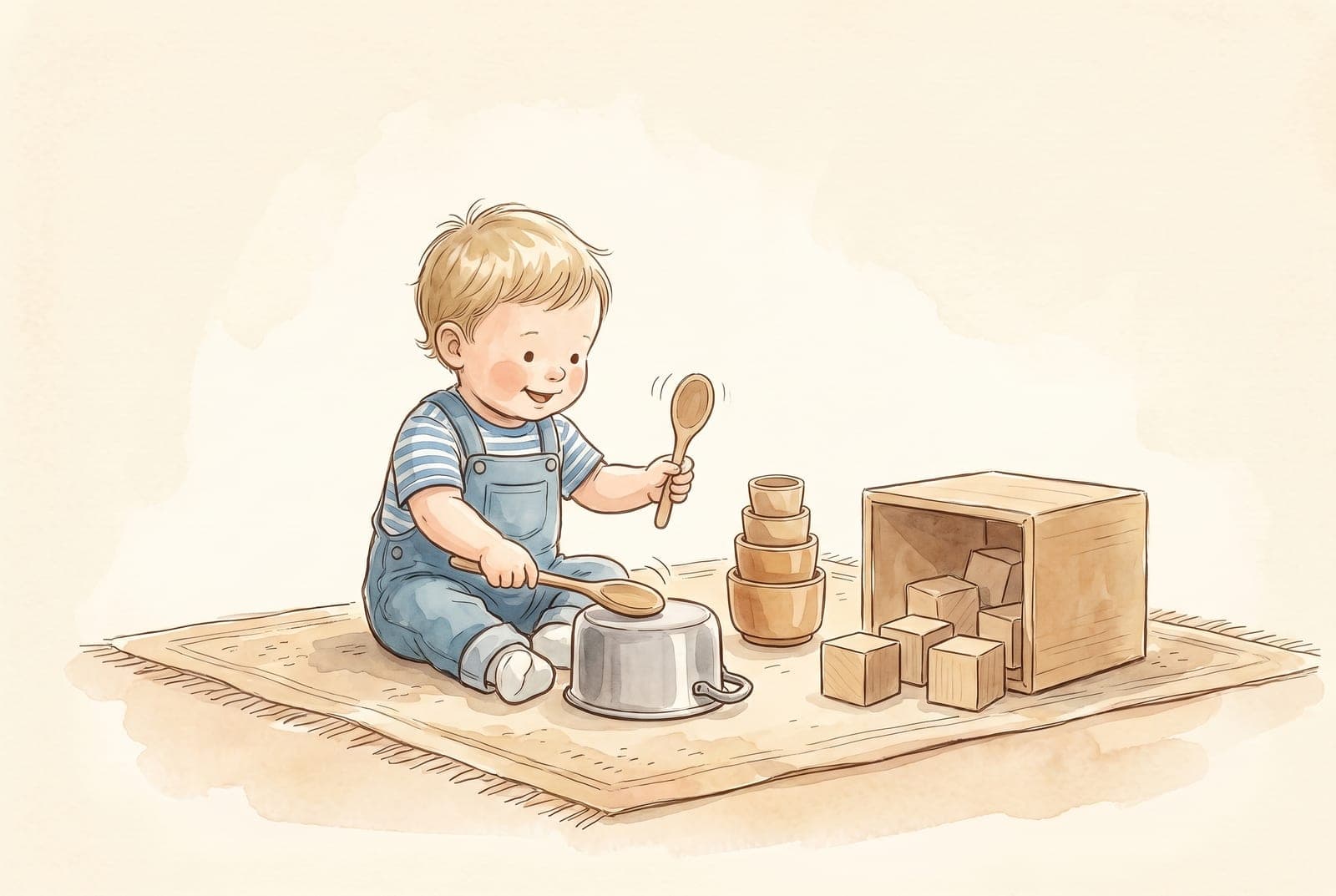
Stacking cups, two wooden blocks, a wooden spoon and a small pot. By 9 months, banging is a milestone, and the noise is the reward. Stacking cups do a lot of work here: they bang, they nest, they hold water in the bath, and later they hold blocks.
In-and-out toys
Putting something in a container is one of the CDC's 12-month milestones, and babies repeat it for months. A box with a lid and a few large blocks will do, or a sturdy bucket, or a shape sorter used as a "drop it in" box. They don't need the shape matching yet. A plain container they can fill and dump works the same way.
Peekaboo and hide-and-find
Looking for a dropped object (9 months) and for something they watched you hide (12 months) are both on the CDC list. During supervised play, a light scarf, a cloth book with flaps, or a toy tucked under a blanket turns that into a game. Put the scarf away when playtime ends. Scarves are cheap, and they also become capes and blankets for stuffed animals two years later.
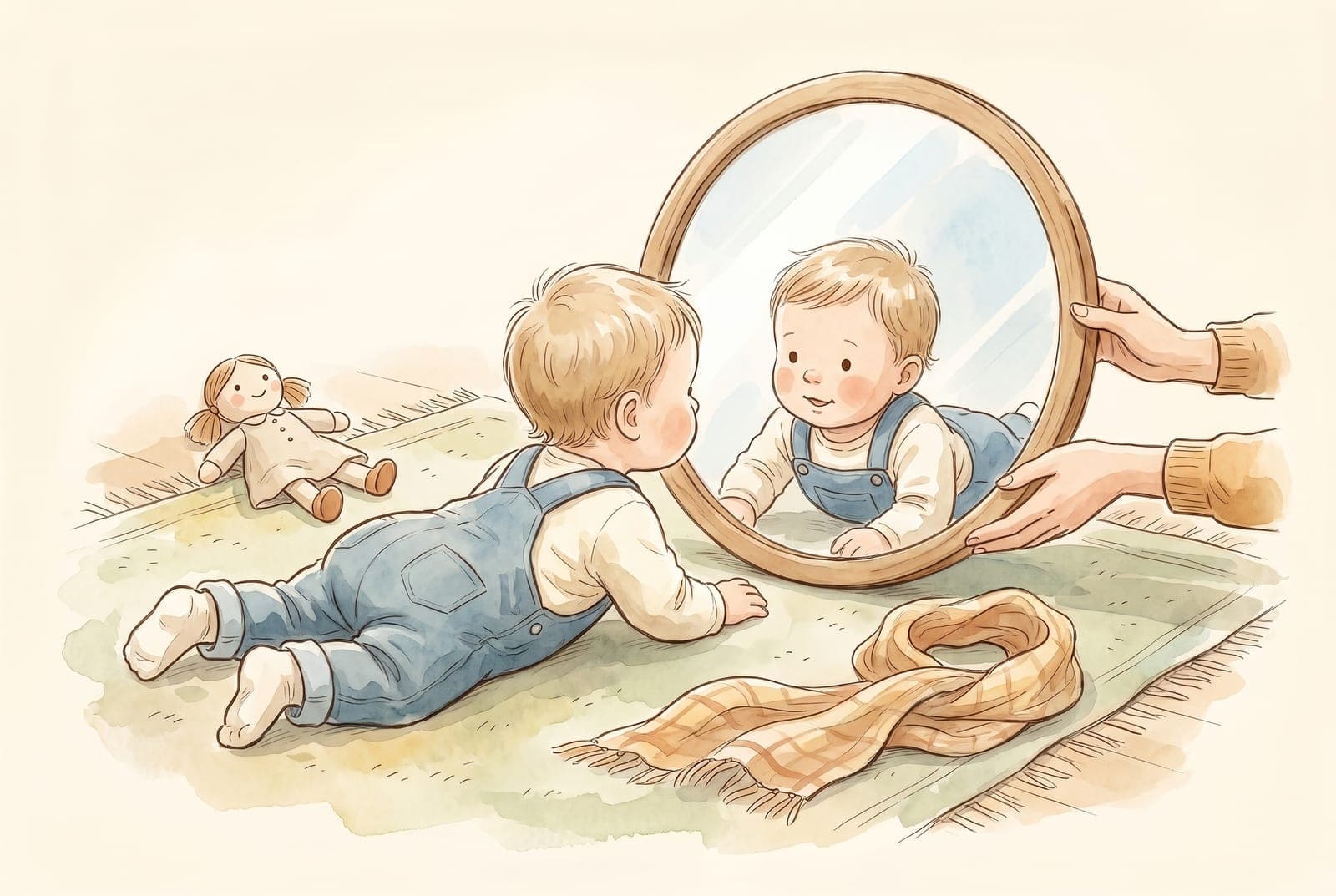
A floor mirror
Most 6-month-olds like looking at themselves in a mirror (another CDC milestone). A floor mirror or a mirror on the side of a play mat makes tummy time more interesting. The CDC suggests putting toys just out of reach during tummy time so your baby works to roll or stretch toward them.
Something to pull up on, later
Around the first birthday, most babies pull up to stand and walk while holding furniture. A stable push toy or a low, heavy activity table can help with this, but wait until your baby is actually pulling up. Before that it's floor clutter.
Board books
Thick cardboard pages survive chewing, and board books are made for reading together. The American Academy of Pediatrics (AAP) puts play with a caregiver at the center of its toy advice.
What to leave off the list
Toys that come with an app
The AAP recommends no screens before 18 months, other than video chat. Dr. Aleeya Healey, the lead author of the AAP's toy report, put it this way: "the best toys need not be flashy or expensive or come with an app."
Big light-and-sound centers, if you already own one
If you already have a large light-and-sound center, consider stacking cups instead, for banging, nesting, and filling.
A note on safety
Always check a toy's age label and safety warnings before you buy it, and follow the manufacturer's instructions. For current toy safety guidance and recalls, see the U.S. Consumer Product Safety Commission and the American Academy of Pediatrics. If you're unsure whether a toy suits your child, ask your pediatrician.
Before you buy, look at what's already on the floor
Baby toys pile up fast, and gifts tend to cluster in the same few categories: rattles, plush toys, and anything that plays a song. Before the holidays or a first birthday, sort what you have by type. If there are six soft toys and nothing to bang or fill, that's the gift list to share with family.
Buying for a grandchild, niece, or nephew? Ask the parents to scan their toys with Toy Rotation App and share the link with you. You'll see what's already at home and which kinds of play are missing, and you can check it again before every birthday and holiday.
Gifts that aren't toys
Baby swim or music classes, a museum or zoo membership for the parents, a contribution to a stroller or high chair, or a photo book of the people who love them.