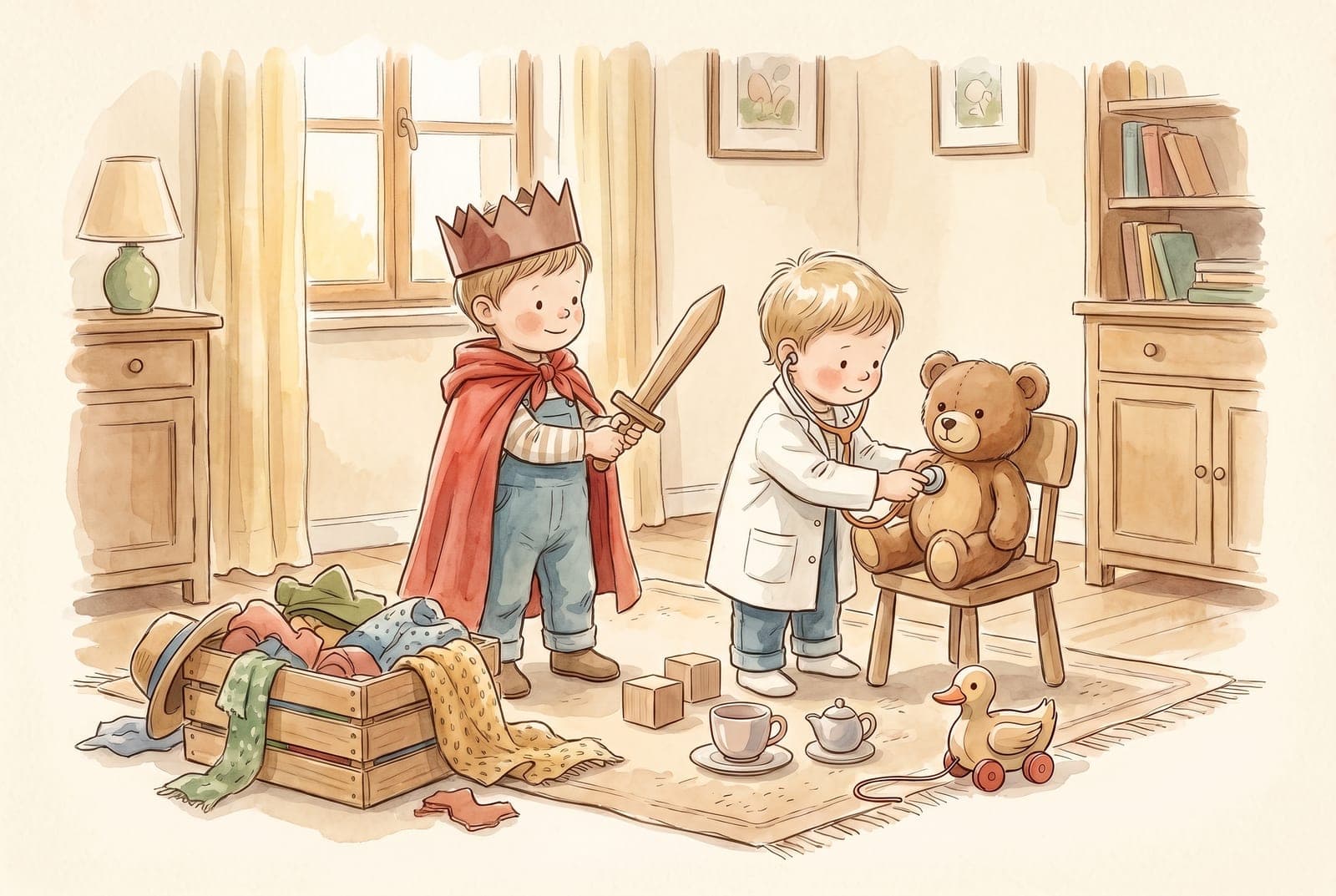
Four-year-olds run the show. They assign roles ("you be the dog"), tell you what happens next in the story, ask to play with friends when none are around, and want a job in every grown-up task. The toys that get used this year support big, social, story-driven play. This guide covers those toy types, what to skip, and how to check the shelf so gifts add something new.
What 4-year-olds are working on
The CDC lists milestones that at least 75% of children reach by a given age. By 4 years, most:
- pretend to be something else during play (teacher, superhero, dog)
- ask to go play with other children if none are around
- like to be a "helper"
- name a few colors and tell what comes next in a well-known story
- draw a person with three or more body parts
- catch a large ball most of the time
- hold a crayon between fingers and thumb instead of in a fist
Pretend play with other people, rules, and stories is the center of this year.
Toy types that get played with
Dress-up and role-play kits
Costumes, hats, a doctor or vet kit, a toolbox, a pretend shop, a play mail set, walkie-talkies (check that the battery cover screws shut). Pretending to be something else is a CDC 4-year milestone, and the AAP describes pretend toys as how children learn to use words and stories to describe and cope with real life. A box of mixed costume pieces often gets more use than one detailed character costume.
Small-world play
Small-world sets let a 4-year-old run a whole story on the floor: a dollhouse, a farm or zoo with animals, a castle, a garage with figures, a train layout. Add figures and furniture to a set your child already owns before buying a new one.
Building sets with more pieces
Choose a building set with more pieces: interlocking bricks, wooden blocks with arches and ramps, magnetic tiles, or a construction kit with wheels and connectors. The AAP's toy report connects building and puzzle play to fine motor, language, and early math skills.
First board games and card games
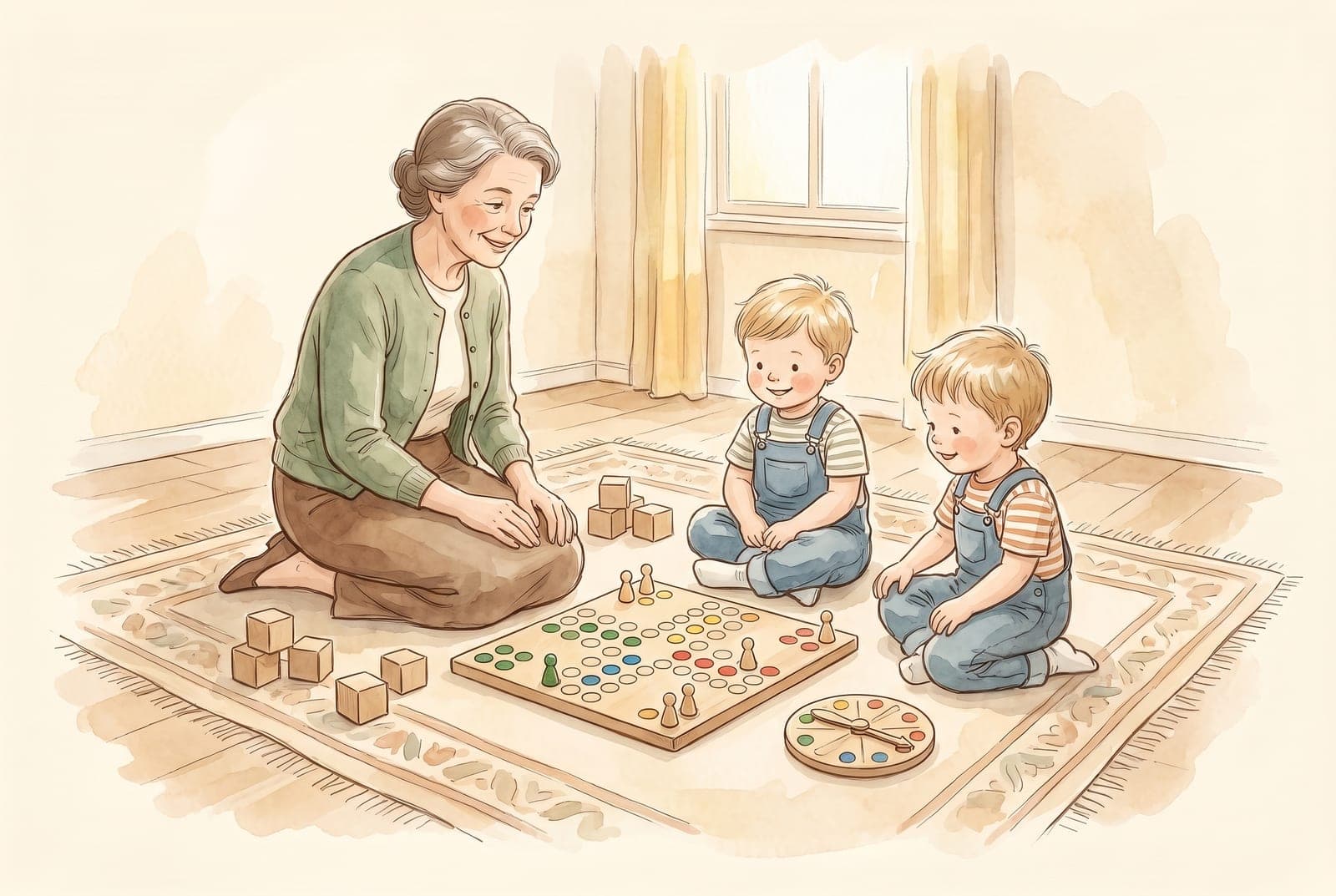
This is the age for first games: matching games, cooperative board games, anything with a spinner or a die and short turns. Cooperative games (everyone wins or loses together) can take the sting out of a 4-year-old losing.
Art and craft supplies
Washable markers, crayons, child-size scissors, glue, tape, stickers, playdough, a stack of paper and a few cardboard boxes. Drawing a person with three or more body parts and holding a crayon with fingers and thumb are both CDC 4-year milestones. The AAP notes that high quality doesn't mean expensive here: cardboard boxes and pads of paper count.
Active play
Catching a large ball is on the 4-year list. A bigger ball, a balance or pedal bike, a scooter, a jump rope for outdoor play with an adult nearby, or a small sports set all get a 4-year-old moving. The AAP groups balls, ride-ons, and other gross motor toys together and notes that the rules kids negotiate while playing together can help with self-regulation.
Real tools for helping
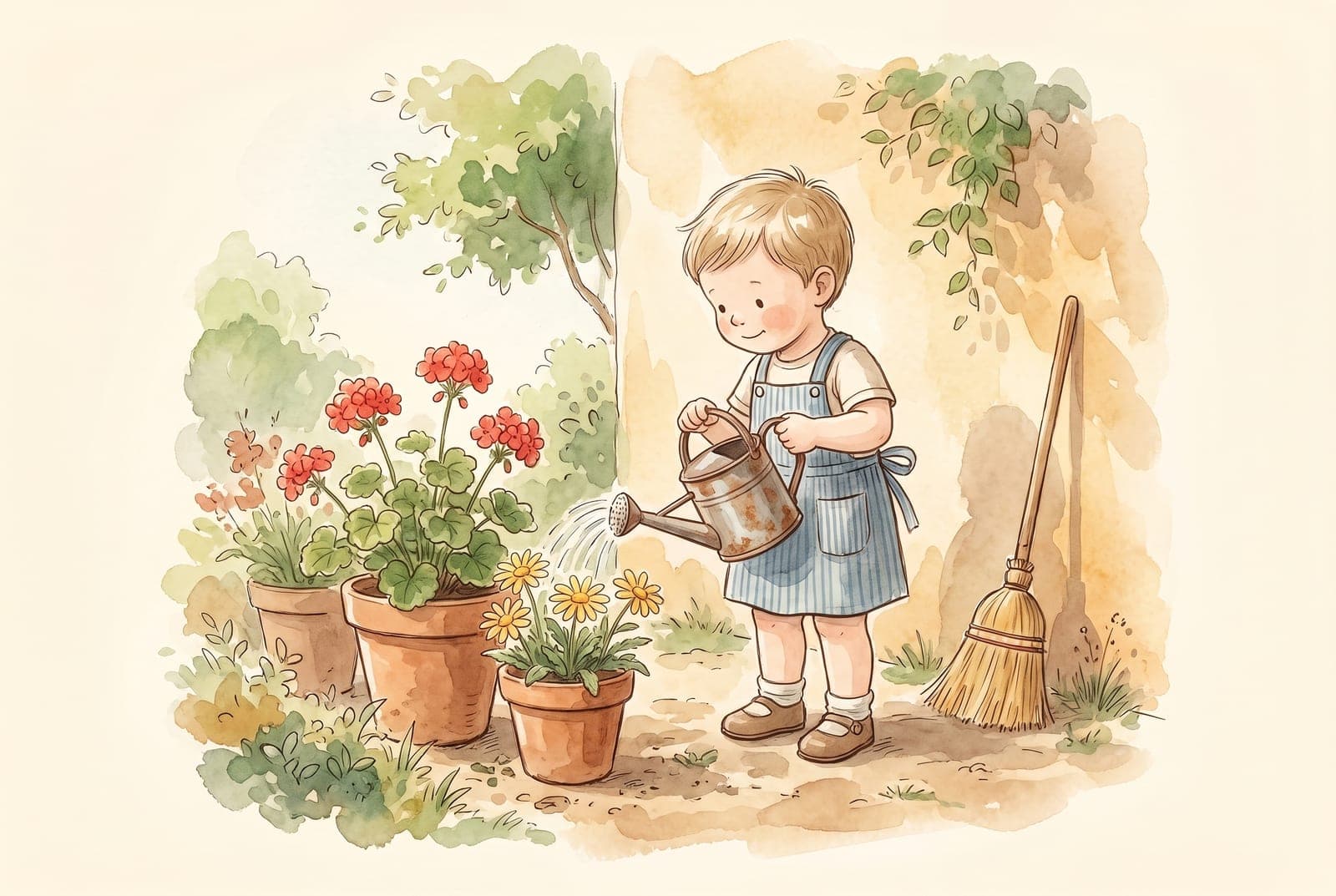
A child-size broom, a watering can, a small pitcher for pouring, an apron. Most 4-year-olds like to be a "helper" and can pour water with an adult watching (CDC). Real tasks with child-sized tools fit that better than another toy version.
Books
Try a longer picture book or an early chapter book to read aloud, or a repeating story your child can "read" back to you. Telling what comes next in a well-known story is a 4-year milestone.
What to skip
Screens labeled as learning toys
The AAP's toy report found no evidence that "educational" digital toys match hands-on and pretend play with traditional toys. It also warns that most "educational" apps target memory skills like ABCs and shapes, which are only part of school readiness.
The third set of the same theme
A child with a strong favorite (dinosaurs, trains, princesses) tends to get that theme from everyone. When several people buy for the same theme, the bin fills up fast. Put the favorite on the gift list next to one other kind of play.
A note on safety
Always check a toy's age label and safety warnings before you buy it, and follow the manufacturer's instructions. For current toy safety guidance and recalls, see the U.S. Consumer Product Safety Commission and the American Academy of Pediatrics. If you're unsure whether a toy suits your child, ask your pediatrician.
Before you buy, check what's there
Sort the shelf into the groups above: role-play, small-world, building, games, art, active play, helper tools, books. Shelves at this age are often full of figures and vehicles and short on games and real tools. Send the thin groups to family as the gift list.
Buying for a grandchild, niece, or nephew? Ask the parents to scan their toys with Toy Rotation App and share the link with you. You'll see what's already at home and which kinds of play are missing, and you can check it again before every birthday and holiday.
Gifts that aren't toys
A class they pick (swimming, gymnastics, dance, art), a children's museum or zoo membership, tickets to a children's theater show, a first library card, a camping night in the backyard, or a regular one-on-one day with a grandparent.